Wheeling the bins down a steep Belmont Hill driveway, raking leaves from under trees that were tall before you moved in, leaning across a back seat to buckle a child in on a slope: none of it is a workout, and all of it asks your trunk to hold you steady while you push, pull, twist and carry. Lately those jobs feel clumsier than they should. Downstairs, the basement holds some equipment that stopped getting used a while ago. You know you ought to be training again, and you would rather not restart in a way that leaves you stiff and sore and back where you began.
Patrick Doherty, CSCS, coaches Pilates and core training for Belmont residents: strength and control through the trunk, breathing that backs up effort, and movement quality that carries into the lifts you already do or are about to start. He works one to one from a private coaching practice in Arlington, a short drive away, and you can train with him in person there, fully online, or with a hybrid of both.
A better order for coming back
A lot of men in Belmont are well established in their careers and a little further along in life than the crowd you picture at a busy gym. That is no disadvantage, but it changes what a good restart looks like. Going straight back to heavy lifting after a long gap tends to end one way: a stiff back, a fortnight off, and the basement door closed again.
Pilates and core training for a Belmont man gives the restart a better order. You rebuild control through the middle first, learn to brace and breathe under effort, and only then put real load on a body that has relearned how to hold it. It is still hard work. You will feel it. But the difficulty comes from control and precision, not from weight you are not ready for.
Pilates and core training for Belmont men with Pat is strength work, not a stretch routine, and it never stands apart from the rest of your training. It is the base everything else sits on: the lifting that builds muscle, the work that supports fat loss, and the physical jobs that come with running a house on a hill.
The trunk as one unit
The front of your middle is the part you see, but the sides and back do as much of the holding. You train all of it together, so your spine and pelvis stay steady from every direction while your arms and legs work.
Breath that backs up effort
You learn to take a breath that stiffens the middle before a hard effort, and to keep breathing calmly through slow, controlled work. It sounds minor. In practice it decides how much of your strength reaches the job in front of you.
Positions that hold in the lifts
The aim is a hinge that stays in the hips, a squat that stays tall and a carry that stays upright. Pat links each piece of core work to a lift or a movement you rely on, then watches that lift to see whether the work is paying off.
What Pilates and core training in Belmont actually asks of you
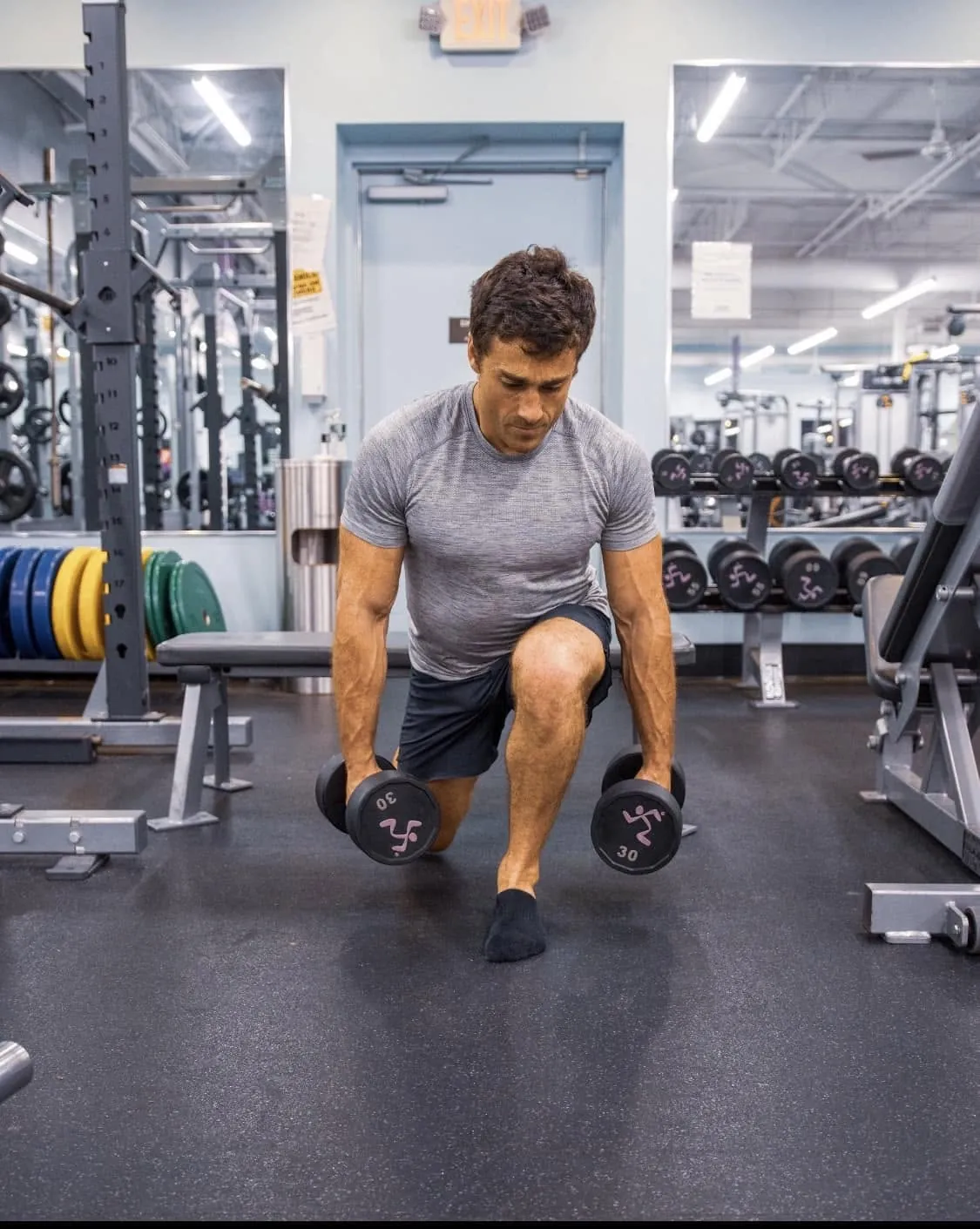
If your picture of core training is sit-ups on the living room floor, the real thing will surprise you. Much of it is slow. You hold a position while one arm or one leg moves, and the job is to let nothing else move with it. You resist being pulled sideways or twisted. You carry a load and keep your ribs stacked over your hips the whole way. You practise the brace at the start of a lift until you can find it without thinking.
The Pilates influence shows up in the precision. Every movement is done deliberately, with attention on where your back is, where your ribs are and what your breath is doing. That attention is the point: it trains you to notice when a position starts to slip, which is exactly the skill a lifter needs when a set gets heavy.
The strength side shows up in the progression. As the positions get easier, they get harder: less support, longer levers, more load, slower movement. Nothing stays the same just because it has become comfortable, and nothing gets harder before you can do the easier version cleanly.
The equipment in the basement
Plenty of houses in Belmont have a corner of the basement where some equipment has been gathering dust. Core training does not need much of it. The early work needs floor space and your attention, which means the hardest part of starting again at home, deciding what to do, is taken off your hands.
As your control improves, what you already own can come back into the plan. Pat writes the program around what you have and where you train, so the equipment you bought for good reasons gets used for good reasons, inside a plan that tells you what to do with it and why. If you would rather train at a gym near your office, the program works there too.
What matters more than any equipment is a plan that connects the core work to the rest of your training, and someone reviewing how it is going. The basement did not go quiet for lack of kit. It went quiet because nothing told you what to do next.
A house on a hill is a trunk test
Think about the physical jobs a Belmont Hill property hands you through the seasons. Shovelling a steep drive. Hauling bags of mulch up from the car. Carrying a child who has fallen asleep on the way home from the car to the door. Dragging a branch off the lawn after a storm. Each one asks your trunk to stay rigid while your limbs push, pull or carry something awkward, often on uneven ground.
That is the same demand a heavy lift makes, and it is why Pat treats your life as part of the brief. If the jobs that hurt your back are the twisting and carrying ones, the core work leans toward resisting rotation and loaded carrying. If it is bending and lifting from the floor, the emphasis goes to the hinge and the brace that protects it. The training is general strength work, but the choices inside it come from the life you lead.
How the training settles into your week
Most of the core work rides along with the lifting rather than claiming days of its own. A few slow, careful movements open a session and get the middle working before anything heavy is attempted, which matters when you have come straight from a desk or a drive. Strength work for the trunk follows the main lifts, when you are warm and can concentrate on position. And the brace itself is rehearsed inside every squat, hinge and press until it becomes part of how you lift rather than something you remember to do.
On a day when lifting is not possible, because the house or the office has taken the evening, a short block of the floor-based work still fits. It keeps the thread of the program going without needing a gym bag or a drive, and on those days it can carry more of the training than usual.
Over the following stages of the program, what you notice tends to be small and practical. Getting up from the floor after playing with a child takes less thought. The bins and the driveway feel like jobs rather than hazards. The first heavy set of a session feels organised instead of shaky. Pat looks at the same signs, alongside how your lifts move, when he decides what to change next.
Why the brace matters more as you get older
There is a general training point behind all this. Strength in the big muscles of the legs and back is only useful if the trunk can transmit it, and the trunk’s ability to do that is a skill as much as a quality of muscle. Skills fade when they are not practised. A man who spent a long stretch at a desk and away from lifting has usually lost more of the skill than the muscle, which is why the first weeks back can feel so awkward.
The good news is that skills respond to practice. Slow, attentive work rebuilds the timing of the brace and the feel for a good position, and steady strength work for the trunk gives that skill something solid to work with. Neither needs heavy loads to begin. Both get better with sensible progression, enough recovery and a plan that keeps asking a little more.
Mistakes men make on their own
Men who try to fix a weak middle without help tend to make the same few errors:
- doing sit-ups and crunches only, which train one direction of movement and ignore the rest of the trunk
- holding their breath through every effort, so the brace collapses as soon as they need air
- going heavy first and hoping the middle catches up
- training only the muscles that show in a mirror
- leaving core work to the end of a session, where it is the first thing dropped on a tired day
- copying a routine with no link to the lifts they actually do
Every one of them is fixable, and none of them is fixed by more effort. They are fixed by better choices about what to train and how, which is the part a coach does for you.
Who it is for, and who should look elsewhere
This suits men in Belmont who want to start lifting again and would like a solid base first. It suits men who already lift and can feel their trunk giving out before their legs or arms do. It suits men whose work and whose house keep them busy, and who want the training they do manage to count.
It is not for someone looking for a gentle stretch, a group workout or a cure for an injury. Pat is a strength coach, not a clinician. If you have pain, an injury or a medical condition, see your doctor first and bring their guidance to your first conversation; Pat will work within it. And core training on its own will not make your midsection leaner. That comes from your overall eating and training, which is why the core work sits inside a full program for fat loss and muscle.
Coaching from a short drive away
Belmont is close enough to Arlington that in-person coaching fits into many weeks. Core training also travels well, so it suits a mix of coached sessions and work done on your own.
Close coaching in Arlington
Make the short drive when the week has room. In person, Pat can watch your ribs, your back and your breathing up close and correct details you cannot feel yet. Those corrections are what make the work you do alone count.
Online, in your own basement
Do the work at home in Belmont, on a clear patch of the basement floor, or at a gym near the office. Pat reviews how it went and sets the next stage of your program.
Hybrid for a house that keeps you busy
Learn new work in person in Arlington, then practise it online between visits, when the house or the office takes more of the week. It stays one program, so the core work and your lifting move forward together.
Because this part of the program asks so little of your space, it is often the piece you can keep going during the heaviest weeks at work, when a full lifting session will not fit.
Pat’s coaching, in short
Pat holds the CSCS credential and coaches men, mostly dads and busy professionals, on fat loss and muscle building. His approach to the middle is simple to describe: watch how you move under a load, find where your position slips, and write trunk work aimed at that point. Tone & Muscle is a private coaching practice, not a gym, so the coaching is one to one and the program is written for you, not handed to a crowd.
Before your first conversation
The meet and greet is a conversation, not a test. It helps to think about a few things beforehand: what training you have done in the past and when you stopped, which jobs around the house feel harder than they should, what is sitting in the basement, and whether in person, online or hybrid suits your week. If you have had medical advice about your back or anything else, bring it. Pat will tell you plainly whether core training is the right place to begin, and how it would connect to the rest of your plan.
Questions men in Belmont ask about core training
Is Pilates really for men who lift?
Yes. The focus on trunk control, breathing and precise movement is exactly what many lifters lack. Pat uses it to support your strength training, so your existing lifts get steadier rather than being replaced.
I do sit-ups already. Is that not enough?
Sit-ups train one direction of movement. The core work here trains the whole trunk, including the muscles that resist bending and twisting, and teaches you to breathe and brace under effort, which is what carries over to heavier lifting and harder physical work.
I have not trained in a long time. Is core work a sensible place to begin?
Often it is. Learning to control your trunk and breathe well under effort gives you a foundation before heavier loading, and the movements can be scaled to where you are now. If you have an injury or a medical condition, check with your doctor before starting.
Can I do it at home rather than coming to Arlington?
Yes. Much of the Pilates and core training for Belmont men needs very little space, so you can follow it online at home or at a gym near work. Coming to Arlington in person is most useful at the start, when getting the positions right matters most.
How does it fit with the rest of my training?
It is part of the same program, not an extra on top. Pat places the core work where it helps your lifting most and adjusts it as your strength and control improve.
Can I use the equipment I already have in the basement?
Yes, once your control is in place. The early work mostly needs floor space, and Pat brings what you already own back into the program when it serves a purpose.
Will this help with shovelling and yard work?
Those jobs ask your trunk to stay steady while you push, carry and twist, which is exactly what this training builds. Pat will not promise a particular outcome, but he does shape the core work around the physical demands of your life as well as your lifting.
Is it too late to start at my age?
No. Core training starts from how you move today, and the progression is set by your control, not by a calendar. If you have health concerns, talk to your doctor first and bring their advice along.
Will core training get rid of my stomach?
Not by itself. It makes the trunk firmer and more capable, while the size of your waist is mostly a matter of what you eat and how you train overall. Pat folds the core work into a complete program for fat loss and muscle for exactly that reason.
What should I tell Pat about my house and my work?
Anything that shapes how you move and when you can train: the physical jobs around the property, how much of the day you sit, how often work takes you away and what is already in the basement. Those details decide what the core work emphasises and where you do it.
Apply to work with Pat
Call Pat, or book a meet and greet with him. Tell him how you used to train, what feels awkward around the house and what you want from your body now, and he will tell you whether Pilates and core training for a Belmont man is the right place to start.