There is a bench in your basement, maybe a rack and a set of dumbbells, bought with good intentions and now holding up boxes. Plenty of houses on Belmont Hill have a corner like that. The equipment was never the problem. What was missing was a plan worth following and someone who expected you to follow it.
Pat Doherty holds the CSCS credential and works as a personal trainer for Belmont men, one at a time. Sessions happen in Arlington, just over the town line by car, or the coaching runs online, or you blend both. Expect sessions planned around your real calendar, the big lifts taught with care, and regular reviews that rewrite the plan once it stalls.
Why men in Belmont train with Pat
Belmont’s professionals tend to be a little older than their neighbours in Medford, and if you are one of them, you are probably established in your career and done with guessing. Pat, a personal trainer for Belmont men, starts from where you are now: the job that fills the day, the family that fills the evening, and the equipment you already own but stopped using.
You do not need a new membership or a gym across town to make progress. You need sessions with a purpose, someone keeping track of every weight you have moved, and a plan that bends whenever the week does.
You may know the pattern. A burst of motivation, a delivery of equipment down the basement stairs, a few good weeks, then work and family crowd it out and the mature trees outside get more attention than the barbell. The fix is not more willpower. It is a program that tells you exactly what to do each session, and a coach who notices when you have gone quiet.
🤝 Coaching that is yours alone
Pat works with one man at a time. Your plan belongs to you alone, never a generic routine shared around a room. He keeps your history, your sticking points and your goal in view at every session.
⏰ A program shaped to your calendar
Early mornings before the drive into work, or a late session once the house is quiet. The plan is built around the days you can train, and when a week falls apart it gets rearranged rather than abandoned.
🎯 Technique you can trust
Plenty of capable men reach middle age without anyone showing them how a good squat, deadlift or press should feel. Pat teaches the positions that let you add weight safely and keep training for the long run, whether you lift in Arlington or under your own basement lights.
📈 Reviews that change the plan
Your progress is checked as you go: which numbers climbed, which stalled, and how hard each workout seemed. When something stops paying off, the program changes. You never repeat a block just because it was written down.
Making the basement earn its keep
A modest home setup can carry a serious program, provided someone writes the program for that setup rather than for a fully stocked gym. That is most of what went wrong the first time. The equipment arrived, and the plan was a vague intention to use it.
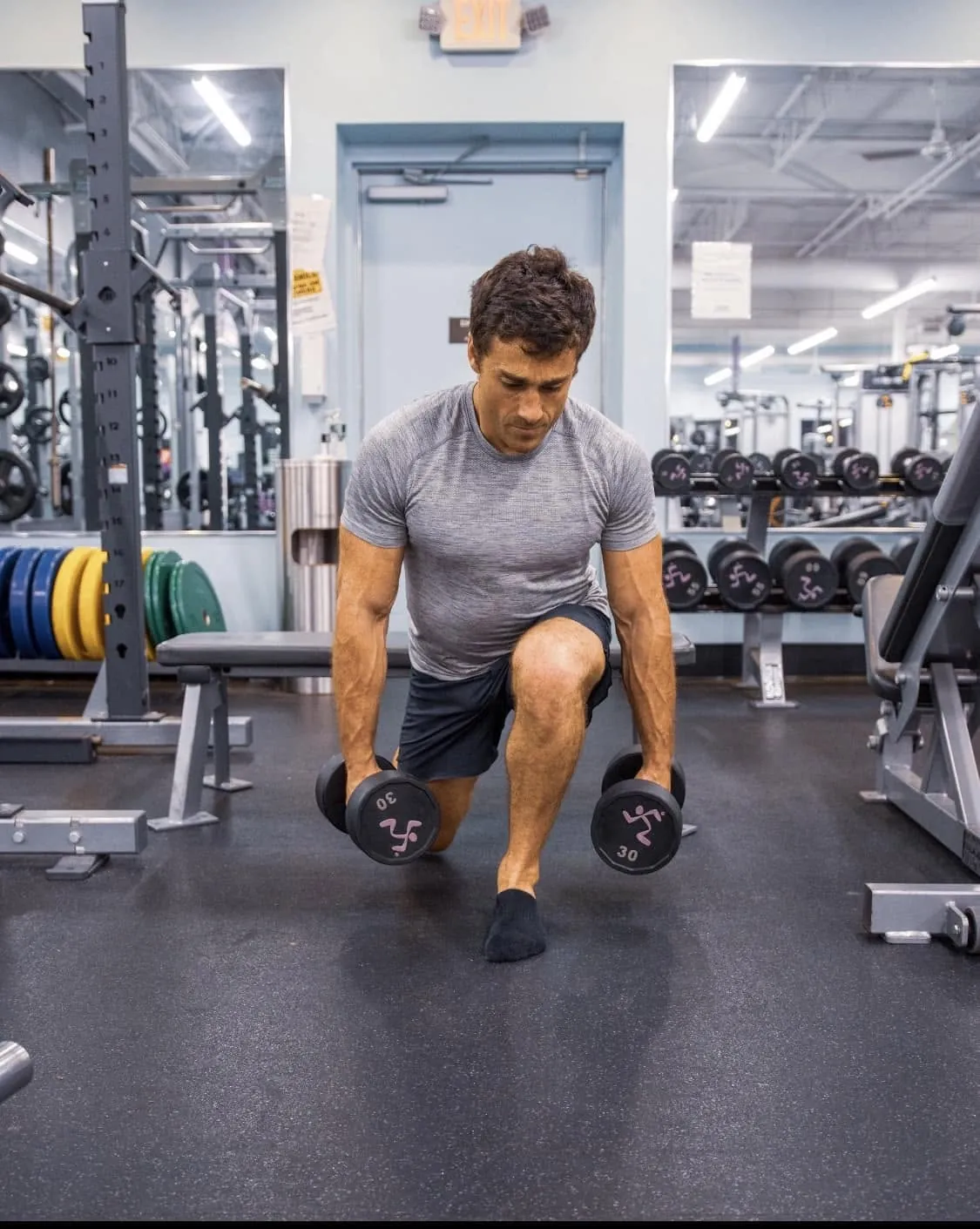
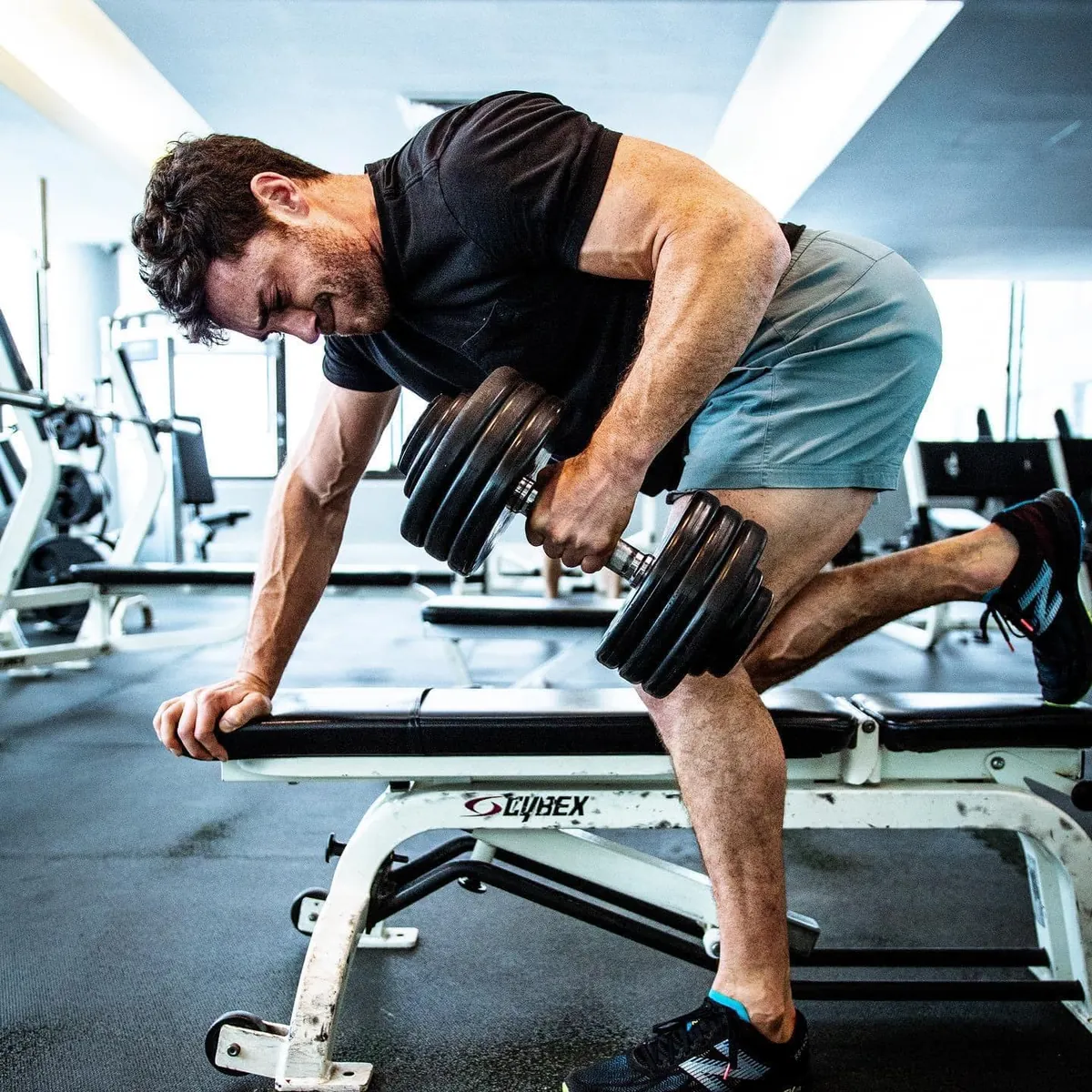
When Pat builds sessions around what is in your basement, the question is not what you own but how to keep asking more of your body with it. With a full rack of plates, you simply add weight. With a fixed pair of dumbbells, you progress in other ways: an extra rep, a slower lowering phase, a pause at the hardest point, a harder version of the same movement, or working one leg or one arm at a time so the same load becomes a bigger challenge. Each of those is a lever, and a good program pulls them in a deliberate order rather than at random.
There are limits, and Pat will be straight about them. Some lifts are hard to load heavily at home, and some movements are worth learning with a coach watching before you practise them alone. That is where an occasional session in Arlington earns its place. You learn the pattern there, under supervision, then run it at home with confidence.
The other change is how the basement feels. When you know what today’s session is, how long it will take and what a good result looks like, going down the stairs stops being a decision. It becomes the next item on the plan.
Strength after forty, done sensibly
The professional crowd in Belmont skews a little older, and that changes how training should be built. Not whether you should lift. How.
Muscle and strength tend to drift downward as men age unless they are trained, which is a strong argument for lifting rather than a reason to avoid it. But a body that has spent decades at a desk responds best to load that rises steadily rather than in leaps. Warm-ups matter more. So do the positions you lift in, because a slightly rounded back that a younger man gets away with is the kind of habit an older one pays for.
Recovery is the other big difference. A hard session leaves a mark for longer, and a heavy week at work or a bad night of sleep shows up in the next workout. Pat plans for that, spacing the demanding sessions so you arrive at each one ready to do it properly, and watching your reports for signs that the load needs to ease for a while.
None of this means training gently forever. It means earning the heavier work through clean technique and steady progress, so you can keep lifting for as long as you want to. If you have an injury or a medical condition, your doctor’s advice comes first. Pat is a strength coach and works within it.
From the first conversation to the next block
The process is simple, and every stage of it is personal to you.
You start by talking with Pat about your work, your family’s calendar, what you have done in the past and what you want now. He asks what is in the basement, what has hurt, and which hours of the week are genuinely yours. From that he writes your first block of training: the days, the lifts, and what each session is for.
The first sessions focus on learning. Pat teaches the main movement patterns, squat, hinge, press and pull, until you can repeat them well, and sets starting weights you can handle with good form. Then the work begins to build.
As you go, you report what you lifted and how it felt. Pat compares that with the plan, and when a block has run its course, he writes the next one from what actually happened rather than from a template.
Inside a session in Arlington
The short drive over the town line buys you something the basement cannot: a coach watching every rep. That is why the in-person sessions tend to carry the most important work.
A session opens with a warm-up chosen for what follows, not a few token stretches. Then comes the main lift of the day, coached closely. Pat watches where your weight sits in your feet, how your back holds its position, whether the bar travels where it should, and gives you one or two clear cues at a time rather than a lecture. When the set looks right, the weight can go up. When it does not, it stays until it does.
After the main lift comes supporting work aimed at the muscles that hold you back, and before you leave, Pat makes sure you know exactly what the home sessions in the days ahead involve and what to watch for when you do them alone. You drive back up the hill with a plan for the basement, not a vague memory of a workout.
A fortnight on Belmont Hill
Picture two weeks of it, for a man who drives into work and has a decent basement setup. This is an illustration, not a fixed schedule.
In the first week, he comes to Arlington early one morning, a short drive before the working day. Pat introduces a new variation of the hinge, checks his squat depth and sets the weights for the days ahead. He runs his other sessions at home on his own equipment, writing down each set. At the weekend, between the yard and the kids, he fits in a shorter workout downstairs.
In the second week, work is heavier and a frost makes the steep driveway a project in itself. He skips the trip to Arlington and runs everything at home, with Pat adjusting the plan to suit the kit. Nothing about the program stops. It just moves rooms.
At the end of the fortnight, Pat looks at the numbers and the notes. If the press has climbed and the squat has stalled, the next stretch reflects that.
Coaching without the drive
Belmont sits a short drive from Arlington, so in-person sessions are easy to reach. But plenty of weeks do not leave room even for a short drive, and that basement setup deserves a second chance. You choose how often you come in, and the rest of the training happens wherever is closest to hand, the basement included.
Sessions in Arlington
Come to Arlington when your week has space. In person is where Pat coaches your technique up close, tests your working weights and sets the next stretch of the program with you in the room.
Your basement, coached online
Run your program at home on the bench and dumbbells already down there, or wherever you lift near work. Pat writes the sessions around that kit, looks over each block once it is done and plans the following one.
Hybrid for busy seasons
Some months you will make it to Arlington regularly, others hardly at all. Hybrid lets you move between the two without starting over, because there is only ever one program.
Whichever mix you choose, the coach and the plan stay the same. A Belmont Hill basement and a session in Arlington are simply two places to run one program.
Habits that stall progress in Belmont
Men on Belmont Hill are rarely beginners at work, but plenty are beginners at training properly. The same habits tend to hold them back.
Treating equipment as a plan. Buying a rack feels like commitment. Without a written program and someone checking it, it becomes storage.
Training like the man you used to be. Picking up where you left off, at the weights you remember, is the fastest route to a sore back and another long break.
Doing only the comfortable lifts. Men drift towards the exercises they like and away from the ones they need. A coach notices which ones keep disappearing.
Counting the yard as the workout. Raking under the mature trees, hauling bins up a steep driveway and clearing snow are real effort. They are not a strength program, because they never get progressively harder in a planned way.
Never easing off. Pushing hard every session, week after week, without planned lighter spells eventually catches up with an older body. Good programs build those spells in.
Leaner and stronger, not just lighter
Most men want two things at once: less fat around the middle and more strength and muscle everywhere else. Training and eating each carry part of that load.
Fat loss comes mainly from eating a little less than your body uses, steadily, without starving yourself into a binge by Friday. Strength training decides what that loss is made of. Lift seriously while you get leaner, and your body has a reason to hold on to its muscle, so the weight that comes off is mostly fat. Diet without lifting, and some of what you lose is the muscle you were hoping to show.
For a man with long days at a desk, protein at each meal and decent sleep do a lot of quiet work in the background. Neither needs a rigid menu, and both are worth getting right alongside the training, because they decide how well you recover from it.
Is a personal trainer in Belmont the right fit
It suits a man who wants to lose fat and build muscle, has some time he can protect each week, and is willing to follow a plan between sessions. Many of Pat’s clients are dads and busy professionals. You do not need to be fit already, and you do not need a gym membership.
It is not for someone who wants a group class, a social club or a quick fix. And if you want to be told you are doing great regardless, the reviews will feel too honest.
If you are comparing a personal trainer in Belmont with other options, ask each one how the plan is written, how progress is checked, what happens after a missed week, and whether they can work with the equipment you already own.
Questions men in Belmont ask
I have a basement full of equipment I never use. Is that enough to train with?
Often it is. A bench, a rack, or a pair of adjustable dumbbells covers a lot of ground when the program is written around them. Tell Pat what is down there and, as a personal trainer for Belmont men, he will build the sessions to fit, adding in-person work in Arlington if something important is missing.
Is it worth the short drive to Arlington for in-person sessions?
It can be, especially early on, when having technique coached up close matters most. If the drive does not suit every week, you can train in person when it does and follow the plan online the rest of the time.
I am in my fifties and out of practice. Is it too late to start lifting properly?
No. The first meeting covers your background, your schedule and your goal. Early sessions use movements that already feel comfortable, and Pat adds weight and difficulty once your form and confidence return. If you are starting again rather than starting fresh, the program respects both what you once could do and what you can do now.
Does Pat come to my house to train me?
No. In-person training happens in Arlington only. Home training is still on the table: you run the plan downstairs or anywhere else that suits, and Pat coaches it online, reviewing each stretch of work and adjusting from there.
Is Tone & Muscle a gym I would join?
No. Tone & Muscle is a private practice with nothing to join and no membership card. You are paying for coaching and a plan written for you, wherever you end up lifting.
I had a trainer at a club once and got nowhere. What is different here?
Often the difference is the plan between sessions. A trainer who only sees you in the room cannot steer the rest of your week. With Pat, every session, in person or at home, belongs to one program that he reviews and rewrites as you go.
My joints are not what they were. Can I still lift?
Most men can, with the right choices of exercise and load. Tell Pat what bothers you at the first meeting, and the program starts with movements that feel good and builds from there. If a doctor is treating a problem, follow their advice first.
I used to be strong. Can I get back there?
That depends on where you are starting from today and how training goes, so nobody honest can promise it. What Pat can do is build from your current level, steadily, and show you exactly how each lift is moving as you go.
Should I buy more equipment before I start?
No. Start with what you have. Pat writes the first block around it, and if something genuinely limits your progress later, he will say so plainly rather than sending you shopping.
Can I keep up my tennis, running or cycling alongside the program?
Yes. Tell Pat what else fills your week and when, and he will place the lifting so the two do not wreck each other. A hard leg session the day before a long run is the kind of clash the plan is there to avoid.
Apply to work with Pat
Call Pat, a personal trainer for Belmont men, or book a meet and greet with him. Describe your schedule, list what is sitting in your basement and say what you are after. Pat will give you a straight answer on whether individual coaching suits you.