The card for the club is still in your wallet. It has not been swiped in a while. Between the early train out of Winchester and the late one back, there has been no obvious moment to use it, and on the occasions you did go, you were not sure what to do once you got there. Meanwhile the walk up from the station on those hilly streets leaves you stiffer than it should, and when you do lift, your midsection feels like the part that gives first.
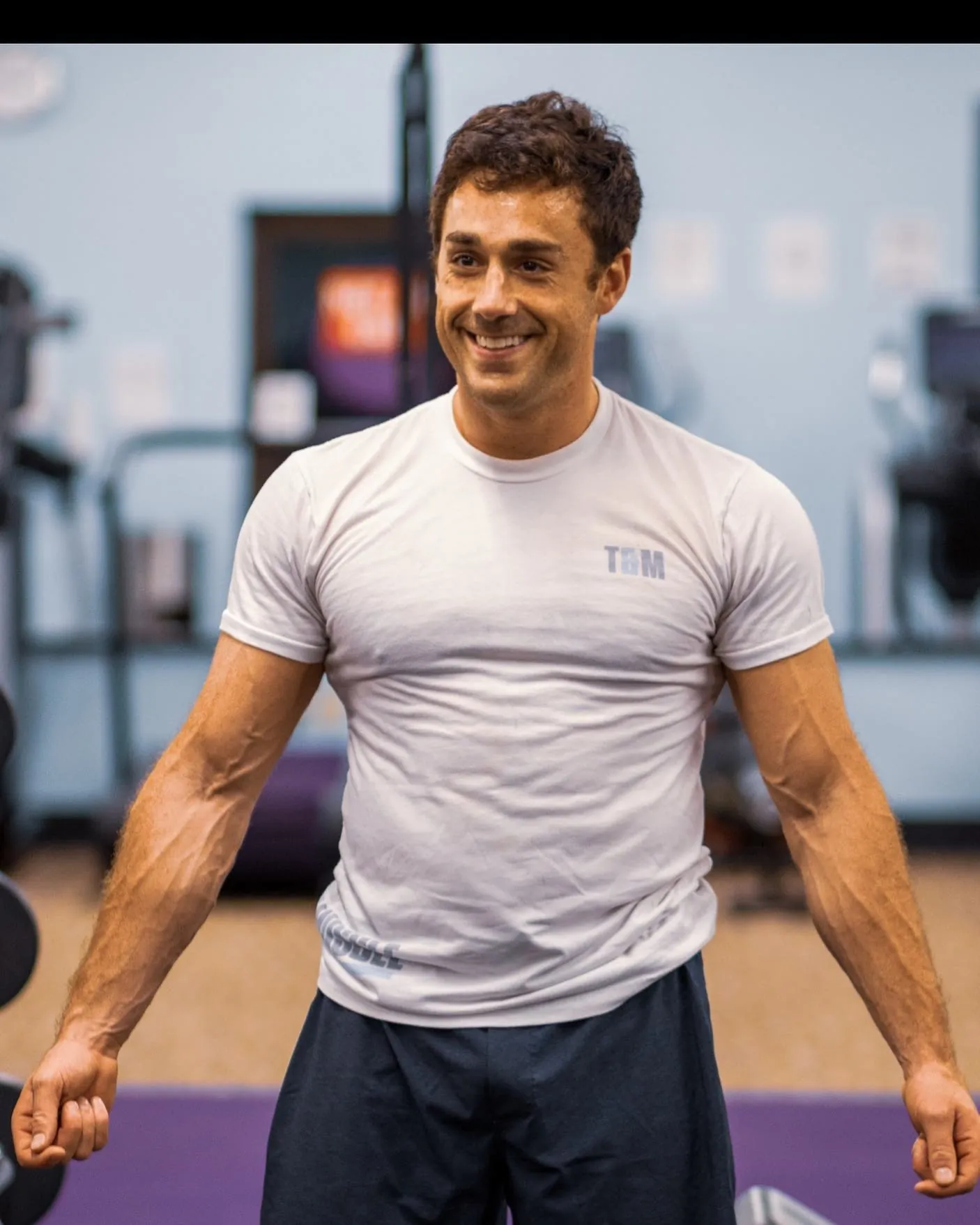
Patrick Doherty, CSCS, coaches Pilates and core training for Winchester men who want a trunk that is strong, controlled and ready for real lifting. You get dedicated core and trunk work, coaching on control and breathing, and movement quality that shows up in the squat, deadlift and press. Pat coaches one to one in person in Arlington, a short drive from Winchester Center, fully online, or with a combination of both.
What a stronger middle does for a commuter who lifts
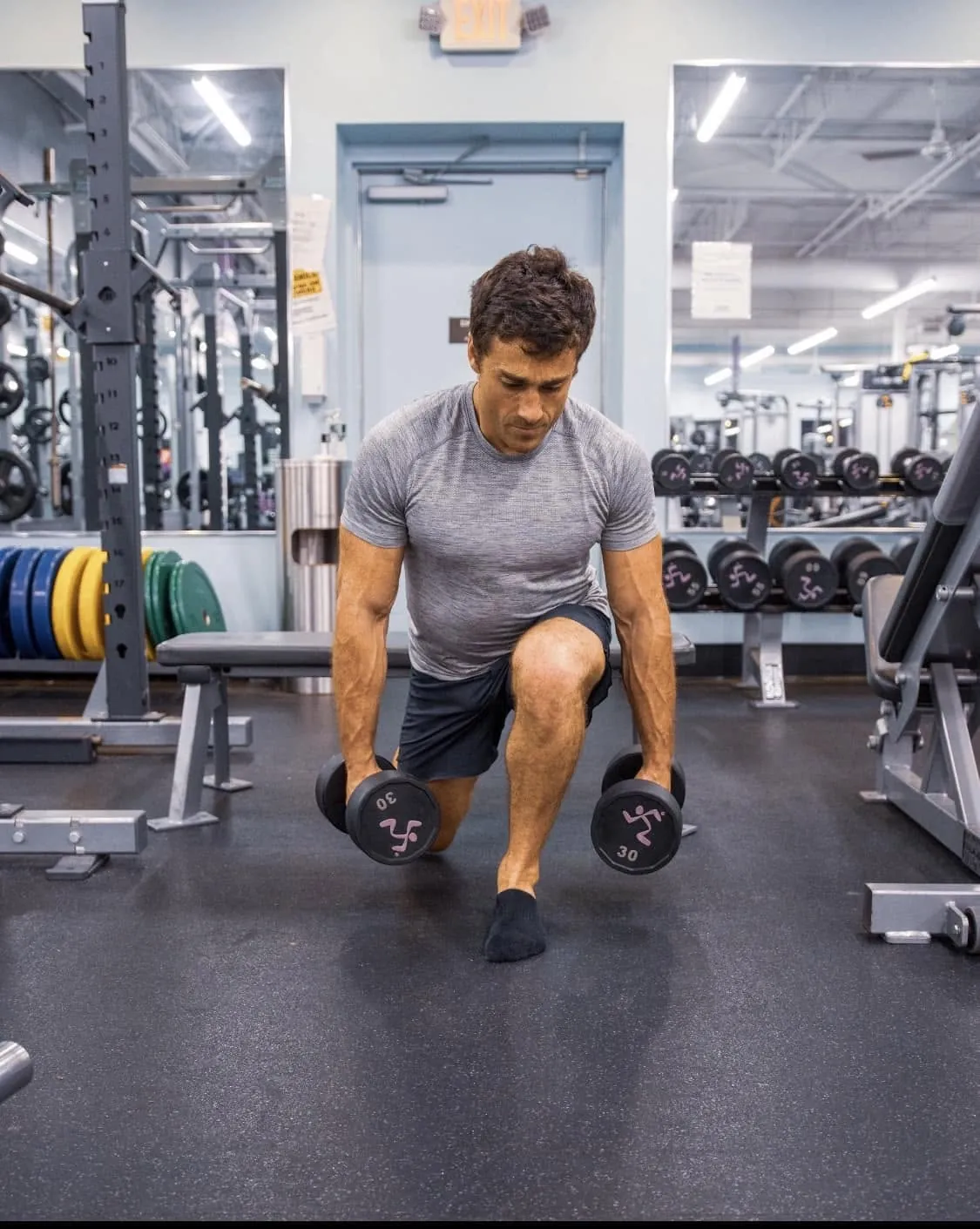
A lot of men picture core training as a set of sit-ups or a plank tacked onto the end of a workout. What Pat coaches is different in kind. Your trunk is the link between your legs and your arms, and under a load its job is to keep still: to stop your spine from rounding, arching or twisting while the rest of you moves the weight. When it does that well, the force you make with your legs and hips reaches the bar. When it does not, some of that force goes into a wobble, a lean or a lower back that ends up doing too much.
Pat’s Pilates and core training for Winchester men trains that link on purpose. From Pilates it takes the slow, exact movement, the attention to position and the deliberate use of breath. From strength training it takes the progression, the loading and the connection to the big lifts. The result is a middle that holds when you ask it to.
A trunk that stays put under load
You work the deep muscles around your midsection and the ones that keep the spine steady as weight climbs. Done well, it means the effort goes into the bar instead of leaking out through a soft middle. It is slow, deliberate work, and much harder than it looks.
Breath you can rely on
You learn how to breathe to stiffen the trunk before a hard effort, and how to keep breathing calmly while you move slowly and precisely. After a long time sitting on a train and at a desk, it is often the piece nobody ever taught you.
Lifts that move the way they should
The control you build goes straight into the training you already do. The hinge gets cleaner, the overhead press steadier and the squat more upright. Pat watches those lifts to judge whether the core work is doing its job.
Getting your money’s worth from the club
Plenty of men in Winchester hold a club membership they have quietly stopped using. Usually the reason is not laziness. It is that a club offers a lot of options and no plan, and after a long day on the commuter rail, a room full of choices is the last thing you want to make decisions in.
Pilates and core training for a Winchester club member is a good way back through the door. It does not need the busiest part of the floor or a queue for a machine. It needs a quiet corner and a clear idea of what to do, and Pat provides the second part. Once the trunk work is in place, the rest of your program follows it in: the lifting that builds muscle and the training that supports fat loss, written for the club you already pay for. If you would rather do the core work at home, in one of the bigger houses around the lakes there is usually a room with enough floor for it.
What changes is not the building. It is that you walk in knowing what today’s session is for and walk out knowing it moved the plan forward.
Hills, lakes and a body that sits all day
Winchester is not a flat town. The streets that climb away from the Mystic Lakes ask something of your legs every time you walk home from the station, and the large houses on them come with their own physical jobs: hauling bags up a sloping drive, carrying a child up a long flight of stairs, shifting furniture from one end of a big room to the other. Add a weekend walk or run, and you may feel you are on your feet plenty.
All of that is worth doing. None of it trains your trunk to hold a loaded position. Walking and running move you forward in a straight line, and the muscles around your middle mostly come along for the ride. What they rarely have to do is stop you twisting under an awkward load, or keep your back flat as you lift something heavy from the floor.
That is the gap core training fills. The same steadiness that lets your squat stay upright is what keeps you balanced carrying a heavy box up a slope, or a sleeping child from the car to the house. Pat chooses the work with both in mind, because the demands of a hilly town and a big house are part of the life your training has to support.
In person is closer than you think
Many men here wrote off in-person coaching a long time ago, on the assumption that the commute left no room for it. It is worth checking that assumption. Winchester Center to Arlington is a short drive, and for a lot of schedules one well-placed in-person session is easier to fit than it sounds, especially on a day you are working from home or a weekend morning.
It also matters more for this kind of training than for most. The brace, the breath and the small adjustments to position are hard to learn from a description. A coach standing beside you can see the moment your ribs flare or your hips shift and correct it before it becomes a habit. Once you can feel the right position for yourself, the work travels well and can carry on at the club or at home. That is why a mix of the two is often the most practical arrangement.
What Pat looks at in your lifting
Core training with Pat starts from your lifts, not from a list of core exercises. He watches how you squat, hinge, press and carry, and looks for the places where the trunk gives way. A chest that drops as you come out of the bottom of a squat. A lower back that rounds as the deadlift gets heavy. Ribs that flare and a back that arches when the bar goes overhead. Hips that shift sideways when you carry something in one hand.
Each of those points to a particular gap in control, and each gets its own trunk work. If you fold forward, the work leans toward resisting that fold. If you arch, it leans toward keeping the ribs down while your arms move. If you twist or lean, it leans toward resisting rotation and side-bending. Then the lift is the test: when the position holds under load, the work has done its job and moves on.
A week with core training in it
For most Winchester men the core work does not need its own day, which suits a commuter-rail week with early starts and late finishes. It goes into the sessions you already have.
A short opening of slow trunk work gets the middle working before anything heavy. That matters when you have come straight from a seat on the train. After the main lifts, there is strength work for the trunk: holding position while an arm or a leg moves, carrying weight without leaning, resisting a pull to one side. And the brace is practised inside every heavy rep until it is automatic.
On a day with no time for the club, a few of the floor-based movements can be done at home before the early train or after the late one. They keep the thread going, so a busy week does not mean starting again.
As your control improves, the work gets harder: less support, slower tempo, more load. When a position keeps breaking down, Pat changes the approach rather than repeating it.
What shifts when the trunk starts doing its job
The lifts feel different first. There is a position at the bottom of the squat that you can find and keep. The deadlift comes off the floor with your back set rather than bending to meet the bar. The press goes up in a straight line instead of being chased by your lower back. You stop wondering whether a heavy set will hold together.
Your breathing becomes a tool rather than an afterthought. You know what to do with it on every hard rep, and on the last set, when concentration slips, it is the thing that keeps the brace in place.
The rest of your training gets more from you. Building muscle and losing fat both rely on training hard and often without breaking down, and a steady middle lets your legs, hips and shoulders take their share of the work.
Where men go wrong on their own
The usual mistakes are easy to spot from outside and hard to see from inside:
- treating core work as an afterthought, done tired and dropped first
- chasing the burn with endless crunches instead of training the trunk to hold
- holding the breath on every hard rep, then wondering why the brace fails
- adding weight to lifts the middle cannot yet control
- following a routine that has no connection to the lifts you actually do
- assuming the walk up from the station counts as core training
None of these is a character flaw. Each is a gap in information, and each is far easier to close once someone is watching.

Who this suits, and who it does not
It suits Winchester men who already lift, or want to, and feel their middle letting them down. It suits the commuter whose day is mostly spent seated and who wants his training to feel solid rather than shaky. It suits the man with the unused club card who needs a clear, sensible way back in.
It does not suit someone after a stretching routine, a group workout or treatment for an injury. Pat is a strength coach and does not diagnose or treat anything; if you have pain or a medical condition, talk to your doctor before you start and share what they tell you. And trunk work alone will not change how your waist looks. That depends on your eating and the rest of your training, which is why the core work sits inside Pat’s wider coaching on fat loss and muscle.
Core coaching around the commute
Whatever your train times, there are three ways to make this work.
Learning the positions in Arlington
Drive over from Winchester Center when the week allows. In person, breathing and bracing are coached at close range, because small errors are easiest to catch with a coach right beside you.
Core work at the club or at home
On heavy commuting weeks, do the work at the club you already belong to or in a quiet room at home. Pat sets it, reviews how it went and adjusts the next round, so progress keeps building.
Hybrid, matched to the diary
Combine in-person coaching when the diary is light with online work when the train takes over. The core work and your lifting stay one connected plan, so nothing restarts when the format changes.
About Pat
Patrick Doherty is a strength coach with the CSCS credential. He coaches men, mostly dads and busy professionals, one to one, on losing fat and building muscle. Tone & Muscle is his private coaching practice in Arlington and is not a gym. He treats the middle of the body as part of the lifting, and coaches it there.
Making a start
The first step is a meet and greet. Come ready to talk about what you lift now, or used to, how your week runs around the train, whether the club or home suits you better, and whether a short drive to Arlington is realistic on some days. If a doctor has given you advice about your back or anything else, mention it. Pat will tell you straight whether Pilates and core training in your Winchester routine is what your lifting needs.
It is also your chance to question him. Ask how the trunk work will tie into your lifting, how the two of you will tell whether it is working, and what the plan looks like on a week when the train leaves no room for the club. Any coach worth hiring should answer those plainly, in terms of your own lifts and your own week.
Questions about Pilates and core training in Winchester
Is this really Pilates?
It is one-to-one strength coaching built around your goals and your lifting. It borrows the control, precision and breathing that Pilates is known for and applies them to what a man who lifts needs from his trunk.
I sit on a train and at a desk most of the day. Is this for me?
It suits men in exactly that position. Long periods of sitting leave the trunk underused, and that shows up when you lift. Core and breathing work helps you feel in control when you train, and it is something you can keep doing in the busiest commuting weeks.
Can core training cure my back trouble?
Pat does not diagnose or treat injuries, and this is not a clinical service. If you have pain or an injury, see your doctor first. What the coaching does is build trunk strength and control for your training.
Do I need to stop lifting to do this?
No. Core training sits alongside your lifting and is meant to improve it. Pat plans the two together, so the core work supports your heavier sessions instead of tiring you out before them.
I already have a club membership. Can I do the core work there?
Yes. Pat writes the work so it fits wherever you train, whether that is your club or your own house. You follow it on your own and he reviews how it is going.
Is driving to Arlington really practical from Winchester?
For many schedules, yes. Winchester Center to Arlington is a short drive, and you may find a session fits on a home-working day or a weekend morning even if you had ruled it out.
How will I know the core work is helping?
Watch your lifts. When the squat stays upright, the deadlift stays in the hips and the press stops turning into a backbend, the trunk work is doing its job. Pat looks at the same signs when he decides what comes next.
Will this flatten my midsection?
Not by itself. Core training builds strength and control, while the look of your waist is mostly down to eating and overall training. That is why Pat coaches all of it in one program.
The house keeps me busy at weekends. Does that count as training?
The jobs around a big house on a hill do keep you moving, and some of them are hard work. What they rarely do is train your trunk to hold position under a planned, progressing load. Core training gives you that, and it tends to make the jobs themselves feel steadier.
What if I have never lifted at all?
That is fine. Learning to brace and breathe before the weights get heavy is a sensible order of events, and Pat will set the starting point at your first conversation.
Apply to work with Pat
Call Pat, or book a meet and greet with him. Tell him what you lift, how much of your day goes to the train and the desk, and where you feel unsteady, and he will say whether Pilates and core training for your Winchester week belongs in your plan.