The train leaves before the house is awake and brings you home after dinner has been cleared. Somewhere between those two trips, training stopped happening. The club membership still renews, you have not been through its doors in months, and every time the charge appears you promise yourself next week.
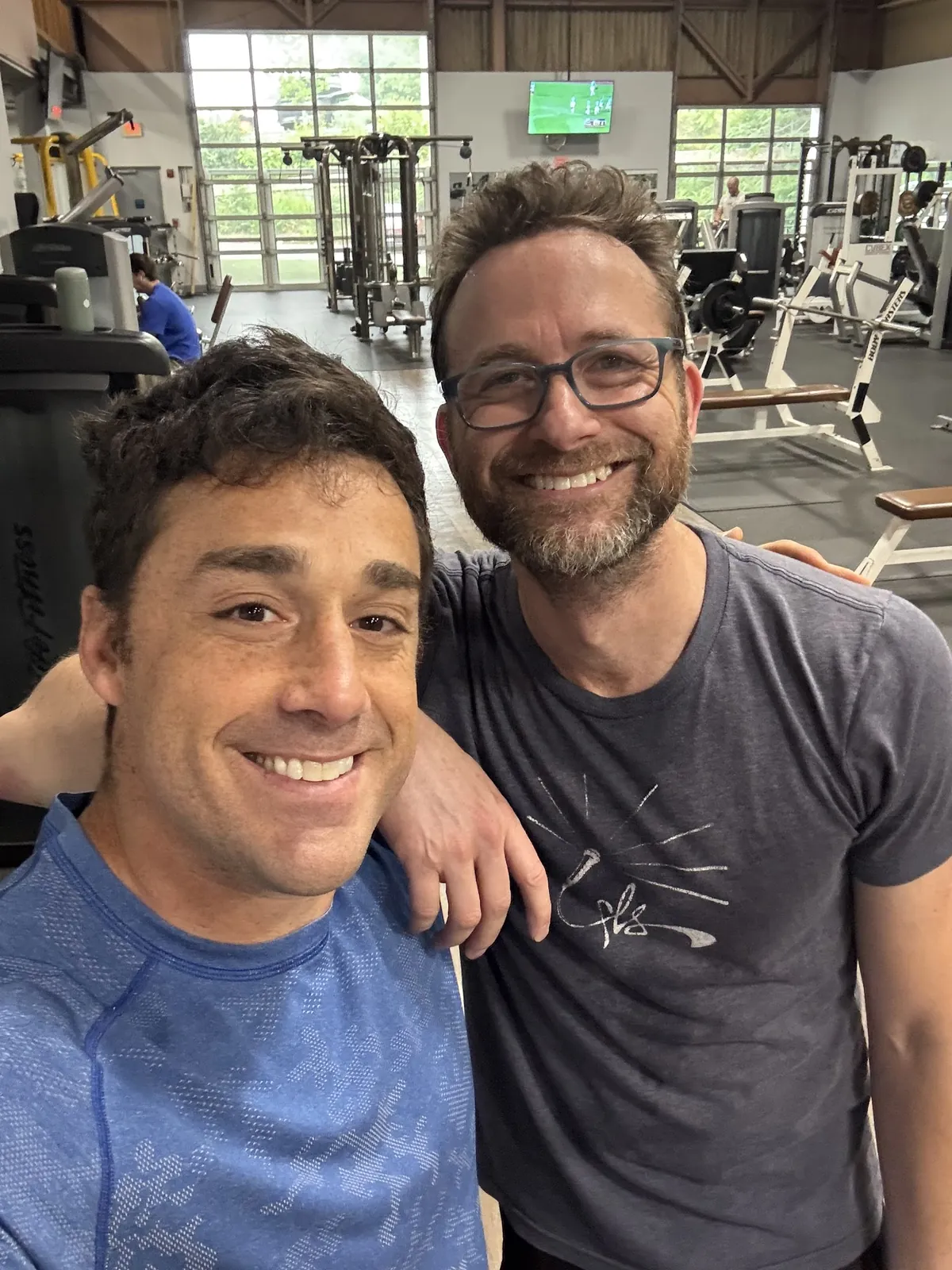
Patrick Doherty, CSCS, is a personal trainer for Winchester men, coaching one to one. You can train with him in person in Arlington, a short drive from Winchester Center, follow the same program online at home or at that club, or mix the two. Whichever you choose, you get a plan written around your train schedule, lifting technique coached properly, and a coach who checks how it is going and changes the plan when it stops working.
Why Winchester men train with Pat
If you live in Winchester, you are probably not out of shape for lack of wanting it. The commute eats both ends of the day, and the gym time you used to protect got squeezed out one late train at a time. As a personal trainer for Winchester commuters, Pat starts from that schedule: which mornings you are on the platform early, which evenings you walk in too late to do anything, and where the realistic windows actually sit.
From there the work is plain. A program you can finish in the time you have, lifts you are taught to do well, and someone keeping track so the effort adds up instead of starting over every few weeks. Nothing about it depends on willpower you do not have at the end of a long day on the rails.
🤝 Coaching that is yours alone
You work with Pat, not a rotating cast of staff or a class schedule pinned to a club wall. He knows what you lifted last time, which days the commute flattened you, and what you are aiming for. Every decision about your training is made with your week in front of him.
⏰ A program built on the timetable
Two sessions on the days you work from home, a short one on a Saturday morning before the family is up, or a lunchtime slot near the office. The plan is written around when you are actually free. When a late meeting moves your train, the week gets reshuffled rather than abandoned.
🎯 Lifts taught properly
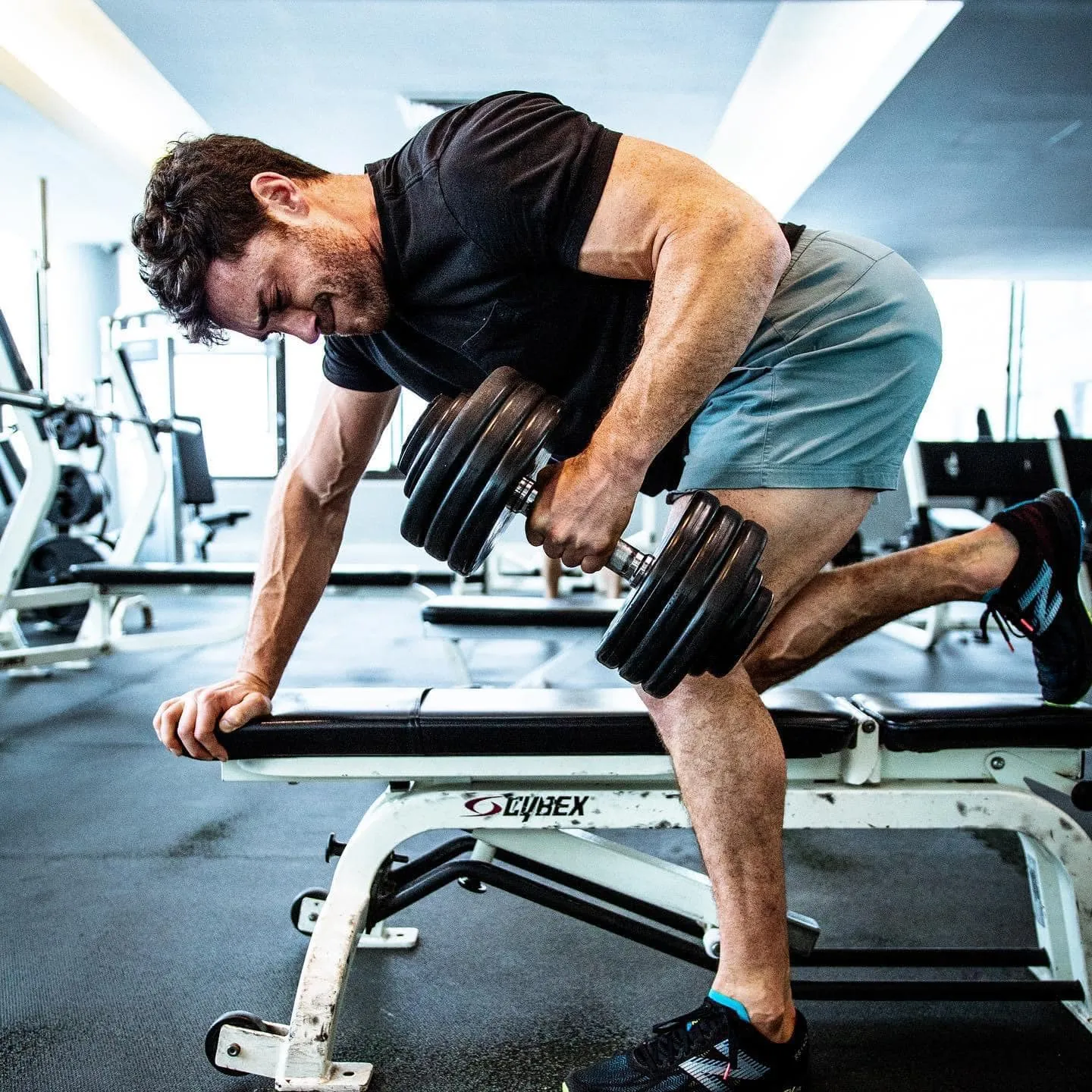
Plenty of men picked up their lifting by copying someone and never had it checked since. You learn to squat, hinge, press and pull with good positions, so the weight can keep climbing without your back or shoulders paying for it. Clean technique is also what makes short sessions worth doing.
🍽️ A plan that changes when you do
Your training is reviewed as you go. If a lift stalls, the program changes instead of repeating the same thing harder. How you slept, how the sessions felt and how heavy the bar moved all shape what comes next.
Giving the club membership a job
An unused membership is rarely about the building. It is about walking through the door with no idea what to do, drifting from machine to machine, leaving unsure whether any of it mattered, and finding it easier not to go next time.
A written program fixes that before you even park. You know which lift opens the session, which exercises follow, roughly how the weights should feel and what you managed last time. You go straight to the rack or the bench you need, do the work, note the result and head home. The club stops being a place you feel you ought to visit and becomes the room where Tuesday’s session happens.
Pat writes the club sessions around what that club actually has. If a piece of equipment is always busy at the hour you can get there, the plan gives you a sensible swap so a crowded floor never ends the workout. If the club is better suited to some lifts than others, the heavier or more technical work can sit on the days you come to Arlington instead.
What you write down after each session matters as much as the session itself. Those notes, the weights, the reps and how it felt, are what Pat reads when he decides what comes next. Over a few blocks, the membership you were about to cancel turns into the place most of your progress happens.
In person was never as far as it seemed
Plenty of men in Winchester ruled out in-person training on the assumption that it meant another long trip on top of the commute. In practice, the drive from Winchester Center to Arlington is short, and that changes the sums.
Coming in for some of your sessions does three things the club alone cannot. It puts a coach beside the bar while you learn a lift, catching the small faults that never show up in your own notes. It turns training into an appointment with another person, which is far harder to drop than a vague plan to go to the club after work. And it lets Pat see how you move, how you breathe under a heavy set and how you recover between sets, which shapes the program better than any written report can.
You do not have to come every week. Some men find it easiest to come in on the days they work from home or on a weekend morning, and train at the club or at home on the rest. The point is that in person is available, and closer than you may have thought.
Room at home, if you want it
Many of the larger single-family houses on Winchester’s hilly streets have a garage, a basement or a spare room with space to train. For a commuter, a session that starts at the bottom of your own stairs removes the last excuse: no drive, no parking, no waiting for a bench.
Home training works best as one part of the mix rather than the whole of it. Pat writes the home sessions around whatever you have, and keeps the lifts that need heavier loading or closer coaching for the club or for Arlington. If you have nothing at home and no wish to change that, the program simply leaves the house out of it.
How the program is put together
Underneath the timetable, the program follows a handful of ideas that strength coaches rely on.
The big movements come first. Squats, hinges, presses and pulls use a lot of muscle together and give the most return for the time a commuter can spare. Smaller exercises are added around them to strengthen weak spots and balance things out.
The demand rises gradually. To keep getting stronger and building muscle, your body needs a little more asked of it as it adapts: more weight, more reps or better control. A good program plans that rise rather than leaving it to how energetic you feel that day.
Technique decides the pace. The weight goes up when the movement is solid, not before. That keeps your back and shoulders out of trouble and lets you keep training.
Recovery is planned, not hoped for. Early starts, late trains and short nights all eat into it. Pat reads how you are sleeping and how sessions feel, and eases the load when the week has taken more than its share.
A week on the train timetable
Here is one possible shape for a Winchester commuter. It is an example, and your own week will look different.
On the day you work from home, you drive over to Arlington mid-morning and train with Pat. That session covers the main lift that needs coaching and sets the weights for the days ahead. On a commuting day, you leave the house in the dark, so training waits until an evening when the train gets in on time, a focused session at the club you already pay for. At the weekend, before the family is up or after a walk by the lakes, you fit in one more session, at home or at the club.
When a late train wipes out the evening session, it moves to another day or shrinks to the essential work. Pat sees the week as it really happened and writes the next one from there.
Coaching around the commute, not on top of it
A lot of men in Winchester have quietly written off in-person training. With the early train and the late return, a fixed session somewhere else sounds like one more appointment the week cannot hold. But Winchester Center to Arlington is a short drive, and once the program is built around your schedule, the sessions that matter most can usually be found. On the weeks they cannot, the plan carries on without them.
Arlington sessions on the lighter days
Train with Pat in person in Arlington on the days you are not catching the early train. Those sessions are where your technique gets watched up close and your next block of training gets set with a coach in the room.
The same plan at the club you pay for
On commuting weeks, you follow your program on your own, at the club you already belong to, at home in your own house, or at a gym near the office. Pat sees how each session went and adjusts what follows, so the membership finally earns its fee.
Hybrid, set by the week’s train times
You may end up somewhere in between: in person in Arlington when work is quieter, online when the commute takes over. There is only one program, so switching between the two never means starting again.
The coaching does not change with the format. One coach, one plan, reviewed and adjusted as you progress.

Where Winchester men lose the thread
The pattern is familiar to a lot of commuters in town, and it usually starts with good intentions.
Paying instead of training. The monthly charge feels like a commitment, so the habit seems to exist even when it does not. A booked session and a written plan are commitments. A direct debit is not.
Saving it all for the weekend. One long, punishing Saturday session after a week of nothing leaves you sore until Wednesday and no stronger. Smaller, regular sessions spread across the week do far more.
Counting the hills as training. The steep streets around the lakes make walking hard work, and it is worth doing. It just does not load your muscles in a way that keeps rising, which is what strength needs.
Waiting for a quieter season. There is always a project at work or a busy term at school ahead. The men who make progress start with the week they have and let the plan adapt.
Training without a record. If you cannot say what you lifted a fortnight ago, you cannot tell whether you are getting stronger. Without that, motivation fades fast.
Who it suits, and who it does not
A personal trainer in Winchester suits a man who wants to lose fat and build muscle, has a few windows he can protect each week, and will follow the plan on the days nobody is watching. You do not need to be fit already.
It does not suit someone after a group class, a social scene or a quick fix, and it will feel uncomfortable if you would rather be told you are doing well than be shown what to change. If an injury or a medical condition is in the picture, your doctor’s advice comes first.
Choosing a personal trainer in Winchester as a commuter
If you are weighing up trainers, test them on your timetable. Ask whether they can work with sessions at your own club or at home, not just in their room. Ask how they adjust when a late train takes a session. Ask how progress is recorded and reviewed, and what happens when a lift stops moving. And ask what qualifies them to write a strength program. Pat holds the CSCS, a strength and conditioning credential, and coaches men, mostly dads and busy professionals, on fat loss and muscle building.
A good coach will also tell you if he is not the right fit. Tone & Muscle is a private coaching practice, not a gym, so there is no membership to sell you and no reason to pretend.
Your first conversation with Pat
It starts with a meet and greet. Bring your train times, the days you work from home, what your weekends usually hold and what the club near you has. Mention any lifting you have done before and anything that has hurt. Pat will ask what you want to change, explain how he would build the program, and tell you honestly whether working together makes sense.
If it does, the first block is written around the windows you named, with the club, the house and Arlington each given the sessions they suit best. The opening sessions are about learning the lifts and finding weights you can control. From there, the plan builds, and every change to it comes from what you actually did on the timetable you actually have.
What Winchester men ask before they start
I already pay for a club I never use. Why add a personal trainer in Winchester?
Because the club was never the problem. An unused membership usually means there was no plan worth walking in for and nobody noticing when you stopped. A program written for your week, and a coach who checks it, gives the membership a job again.
I leave on an early train and get back late. When would I actually train?
The first conversation is about exactly that. Pat looks at the days you work from home, your weekends and any gaps near the office, then builds sessions to fit those windows. Shorter, well-planned sessions done regularly beat long ones you never get to.
Is getting to Arlington realistic from Winchester?
Yes. The drive from Winchester Center to Arlington is short, closer than it may seem if you had ruled out in-person coaching. If the drive only works some weeks, you train in person on those and follow the online plan on the rest.
I have not lifted seriously in a long time. Where would I start?
With a conversation about your history, your schedule and what you want to change. You begin with the movements you can do well now, and the program builds as your technique and strength come back. Nobody expects you to walk in where you left off.
Do I have to give up my club membership?
No. Tone & Muscle is a private coaching practice, not a gym, so there is nothing to switch. You can keep your club and use it for the sessions you do on your own, with Pat writing the program you follow there.
What if my club is packed at the only hour I can go?
Then the plan includes alternatives. Pat writes swaps for the equipment that is usually taken, so a busy floor changes the exercise rather than cancelling the session.
Will this help with the weight I have gained since I started commuting?
Lifting is a big part of getting leaner, because it keeps your muscle while fat comes off. The fat loss itself depends mostly on what you eat across the week, so bring your eating habits up at the meet and greet. Nobody can promise a result or a date, but a plan that fits the commute gives you a real chance.
Can I work from home some days and train in Arlington on those?
Yes, and those days are often the easiest to protect. A session in Arlington on a home day keeps the technique coaching regular, while the other days run at the club or at home.
Do I need to be in decent shape before the first session?
No. The first sessions are about learning the lifts with weights you can control. Pat works from where you are now, not from where you think you ought to be.
Is this only for men who want to get big?
No. Pat coaches men on fat loss and muscle building, which for most means getting leaner, stronger and more capable. Size is one part of that, but the program is set by your goal, not by a bodybuilding template.
Apply to work with Pat
Call Pat, or book a meet and greet with him. Bring your train times and the days you can realistically give to training, and he will tell you honestly whether a personal trainer for Winchester fits your week.