
Your day opens and closes with the trip to Cambridge or Boston, and whatever training you do gets squeezed into the gaps on either side. Some weeks that means a run down the bikeway. Some weeks it means nothing at all. You are not out of shape, exactly. You are just not getting anywhere, and the hours you do find are spent guessing.
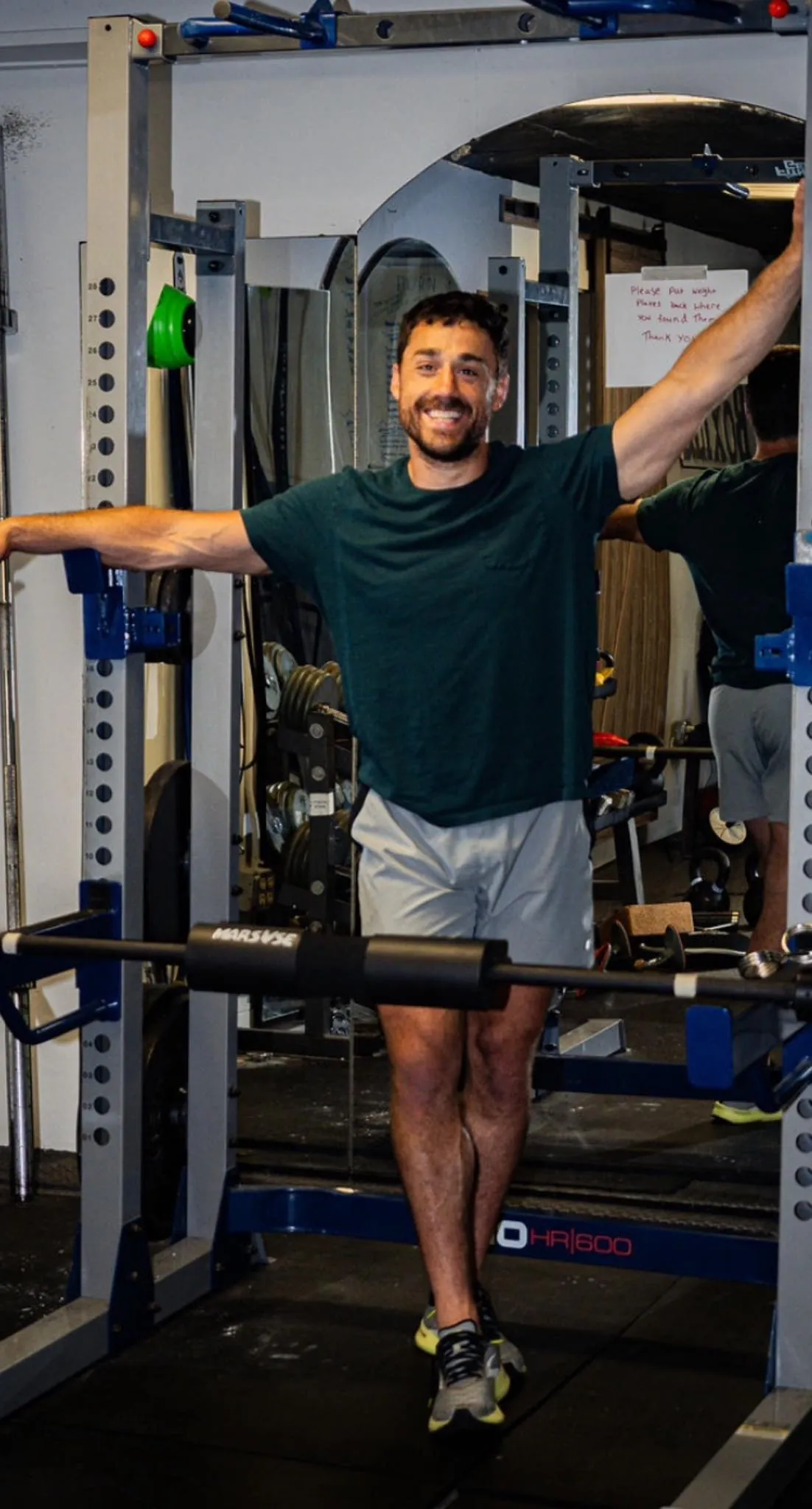
Working with a personal trainer in Arlington, Patrick Doherty, CSCS, is built for that week. Pat coaches men, mostly dads and busy professionals, one to one, with a plan written around your hours and a coach who keeps checking that it still works. The goal is the one most men arrive with: lose fat, build muscle, and feel strong again. You can train with him in person here in town, online, or with a mix of the two.
Why Arlington men train with Pat
Arlington is home for this practice. Tone & Muscle is a private coaching practice based here, not a gym, and Pat works as a personal trainer in Arlington who starts from your calendar rather than a class timetable. This is a town with a heavy commuter population into Cambridge and Boston. If you are part of it, you leave early, get back late, and have tried to fit fitness into whatever is left of the evening.
What you lack is not effort. It is a program that makes the few hours you have count, taught by someone who watches you lift and changes course when progress stops. A commuter cannot afford to waste a session on a plan that was never built for him, and he should not have to work out on his own why the last few months went nowhere.
📱 A coach who knows your file
Your personal trainer in Arlington is Pat and nobody else. He knows which lifts you did last session, which ones felt heavy, and what your week ahead looks like. Each session picks up exactly where the last one stopped.
⏰ Sessions placed around the train and the traffic
Your plan is written for the days and hours you actually have, not an ideal week. If Tuesday disappears to a late meeting in Boston, the week is reshuffled rather than lost, and the important work still gets done.
🎯 Learning to lift properly
Squatting, hinging, pressing and pulling are coached rep by rep until the positions are solid. Clean technique is what lets the weight climb without your back or shoulders paying for it later, and it matters more when sessions are short and every set has to be a good one.
📈 Reviews that reshape the next block
Pat reviews how each stretch of training went: what moved, what stalled, how you recovered after a heavy week at work. The next phase is built from that, so you are never repeating a program that stopped working long ago.
What a personal trainer in Arlington actually does
Forget the picture of a man in a polo shirt counting reps beside you. Personal training here has three parts: a coach, a written program, and a loop of feedback between the two. Each one does a job the others cannot.
It starts with a conversation. Pat wants to know what your week looks like hour by hour, what you have done in a gym before, what hurts, what you enjoy, and what you want to look and feel like. That conversation decides where you train, which days carry the sessions, and which lifts you start with.
Then comes the program. Every session has a purpose written into it: a main lift you are trying to move forward, a handful of supporting exercises that build the muscle around it, and a clear idea of what a good day looks like. You walk in knowing what to do. On the days you train with Pat in Arlington, he coaches each set, corrects positions as they happen and decides on the spot whether the weight should go up. On the days you train elsewhere, you follow the same plan and report how it went.
The third part is the one most men have never had. Pat reads what happened, compares it with what was supposed to happen, and changes the next stretch of training to suit. A lift that keeps climbing is left alone. A lift that has stuck, or a week that wore you down, gets a different answer.
Fat loss and muscle building both sit inside this. Lifting is what tells your body to keep or build muscle. How much fat comes off is decided largely by what you eat across the week, and the training makes sure that when weight does come off, it comes from fat rather than from the muscle you are trying to keep. That is why a man who wants to get leaner still needs a serious strength program, not just more cardio.
The ideas the program rests on
None of this is secret. It is what decent strength coaching has always rested on, applied to a man with a desk job, a commute and a family.
- Progressive overload. Muscle and strength grow when the work asks a little more of you over time: more weight, another rep, cleaner positions. A program has to plan for that, or it stalls.
- Compound lifts first. Squats, hinges, presses and pulls train a lot of muscle at once and give the most return on short sessions. Smaller exercises fill in around them.
- Technique before load. Good positions are what let the weight keep rising safely. Weight added to a bad pattern just adds risk.
- Recovery counts as training. Sleep, food and rest days are when the body adapts. A program that ignores a bad night or a brutal week is a program that breaks you.
- A plan built for the real week. Training that fits your actual calendar gets done. The perfect plan you cannot follow is worth nothing.
- Habits over willpower. By the evening commute, willpower is spent. Sessions that are booked, planned and expected carry you when motivation does not.
A week of it, around the Cambridge run
Here is roughly what that looks like for a man who leaves Arlington early and gets back late. It is an example, not a fixed offer, because your own week sets the shape.
Early in the week, before the commute, you train with Pat in Arlington. That session carries the heaviest work and anything new: a lift you are still learning, a weight you have not tried yet. Midweek, when the office keeps you in the city, you run a shorter session on your own at a gym near work, following the plan and noting what you lifted and how it felt. At the weekend, with no train to catch, there is room for a fuller session, at home if you have the space or wherever you lift best.
Between sessions, your walks along Mass Ave and rides on the bikeway carry on. They help your heart, your mood and your recovery. They just are not the part of the week that builds strength. Then Pat looks at the whole week: did the main lifts move, did you sleep, did Thursday collapse under a deadline. The next week is written from that.
When a week goes badly, nothing is lost. A missed session is moved or dropped, and the plan picks up where you are rather than where you were supposed to be.
Who this suits, and who it does not
It suits men who want to lose fat and build muscle and are prepared to follow a plan between sessions. Many are dads. Many are professionals whose calendars belong to someone else for most of the day. Some have never lifted. Others lifted seriously once, drifted, and want to come back without hurting themselves.
It does not suit everyone. If you want a busy group class with music and a crowd, this is not that. If you want a gym membership with a coach thrown in, Tone & Muscle is a coaching practice and has no membership to sell. If you want someone to shout encouragement and nothing more, you will find the reviews and the plan changes more demanding than that. And if you are dealing with an injury or a medical condition, talk to your doctor first. Pat is a strength coach, not a clinician.
Coaching without the drive
In-person slots in Arlington before work and after work are the first to go, and the reason is simple: this is a town full of people heading into Cambridge or Boston every morning, and those are the only hours they have. You do not have to wait for one of those sessions to open before you start. Men from the towns around Arlington use the same three options.
Face to face before or after the commute
Claim a session with Pat in Arlington whenever your schedule allows. That is where new lifts get taught, technique gets sharpened, and heavier work gets tested with a coach beside the bar.
Online, near the office
On the days you are stuck in the city, you run the same program at a gym near work. Pat sees how the sessions went and writes the next steps, so a long day downtown does not cost you the week.
Hybrid, set by the commute
You can land in between, coming in on quieter weeks and training remotely when meetings pile up. The program stays one program, so switching between the two never means starting again.
Because the early and late hours fill first, the first conversation is about which hours you can reliably hold. If none of them fit yet, online coaching gets you lifting while you wait for one that does. Either way, the coach, the plan and the reviews are the same, and the only thing that changes is where the bar happens to be that day.

Where Arlington men go wrong on their own
Most of the men who end up talking to Pat have already tried to sort this out themselves. The same few mistakes come up again and again.
Counting the bikeway as a program. Riding the bikeway or walking the length of Mass Ave is good for you. It is also something your body adapted to long ago, so it stops asking for change. Strength and muscle need load that rises over time.
A different workout every time. A video one day, a class the next, whatever the gym floor suggests on the third. Variety feels productive, but nothing gets practised long enough to improve, and there is no way to tell what is working.
Waiting for a home gym the house cannot hold. A two-family in East Arlington or a cape in the Heights rarely has a spare room for a rack. Men put off starting until they find the space. The answer is to train where the equipment already is.
Adding weight faster than technique. Chasing a bigger number with a rounded back or a shrugged shoulder works for a while, then the body sends the bill. A coach watching the bar catches it early.
All or nothing after a bad week. One late night in Boston turns into a lost week, then a lost month. A plan that expects disruption, and gets rewritten around it, keeps you training through the busy stretches instead of starting over after them.
Choosing a personal trainer, wherever you live
Whether you end up working with Pat or not, a few questions will tell you a lot about any trainer.
Ask what qualifies them to write a strength program. Pat holds the CSCS, a strength and conditioning credential, and the program you follow is built on that training. Ask whether the plan will be written for you, from your schedule and history, or handed over from a template. Ask how progress gets reviewed and what happens when a lift stalls. Ask what the plan does when you miss a week, because you will. And ask where you would actually train, because a coach who only works if you can reach his room at fixed hours may not suit a commuter.
Then notice how the first conversation feels. A good trainer asks more than he tells, and is willing to say when he is not the right fit.
How to get started
The first step is a meet and greet with Pat. It is a conversation, not a sales pitch and not a workout. Bring a rough picture of your week: when you leave, when you get back, which days are predictable and which are not. Bring your training history, good and bad, including anything that has hurt. Know where you could realistically lift, whether that is in Arlington with Pat, a gym near the office, or a corner at home. And be honest about what you want to change.
From there Pat will tell you whether one-to-one coaching fits, and which of the three ways to train suits your week. If it does, the first sessions use lifts you can already do well, and the program builds from there.
Questions Arlington commuters ask
Can I start before an early or evening slot opens up?
Yes. You can begin online straight away, following the same plan at a gym near home or near the office. When an in-person session in Arlington becomes available, you move into it without changing programs or losing what you have built.
I already walk Mass Ave and ride the bikeway. What does a personal trainer in Arlington add?
Strength. Walking and riding keep you fit for daily life, but they do not load your muscles enough to make them grow or get stronger. A trainer adds the lifting, teaches you to do it well, and keeps the plan moving forward.
Where would I train if there is no space at home?
A two-family in East Arlington or a cape in the Heights rarely has a spare room for a rack and plates, and that is fine. You can train in person with Pat in Arlington, or at any gym close to home or work. The program is written around whatever equipment that gym has.
How many days a week would I need?
That comes out of the first conversation about your week, not a fixed rule. The plan is built on the days you can protect. When a week gets busier, Pat adjusts it rather than asking you to find time that is not there.
Is there a membership or a gym to join in Arlington?
No. It is a private coaching practice: you work with one coach, Patrick Doherty, CSCS, with no membership involved. What you pay for is the coaching and the plan, not a key card.
My main goal is losing fat. Is personal training the right place to start?
Usually, yes. Lifting is what keeps the muscle you have while the fat comes off, so you end up leaner rather than just smaller. What you eat drives most of the fat loss itself, so it is worth raising your eating habits when you first meet.
I live just outside Arlington. Can I still work with Pat?
Yes. In-person sessions take place in Arlington, so if you can get here, you can train with Pat face to face. If the trip does not suit, online coaching works from anywhere, and hybrid lets you mix the two.
What happens if work travel or a heavy month knocks me off course?
The plan bends rather than breaks. Pat can shorten the sessions, move them, or write a version you can follow in a hotel or a gym near a client site. When things settle, you pick up from where you actually are.
What happens at the meet and greet?
You talk through your week, your training history and what you want to change, and Pat explains how he would approach it. There is no workout and no pressure. You both leave knowing whether working together makes sense.
Will an early session leave me wiped out for the rest of the workday?
It should not. The first weeks are pitched so you finish feeling worked, not wrecked, and the load rises as your body adapts. If a morning session is draining you before a long day in Cambridge, that is exactly the sort of thing the reviews pick up and fix.
Apply to work with Pat
Call Pat, or book a meet and greet with him and tell him which hours your commute leaves you. He will tell you honestly whether a personal trainer in Arlington is what you need, and which of the three ways to work with him suits the week you have.